

If you’ve ever touched down in Ho Chi Minh City after a long flight from Australia, you’ll know the drill. You’re sticky, tired, and just want to get to your hotel without any drama. In the past, that meant the dreaded SIM card shuffle at the airport. Having lived in Vietnam for a while, we’ve done it more times than I care to remember. But for this upcoming three week trip, we are making life easier by using a Vietnam eSIM to stay online from the second we land.
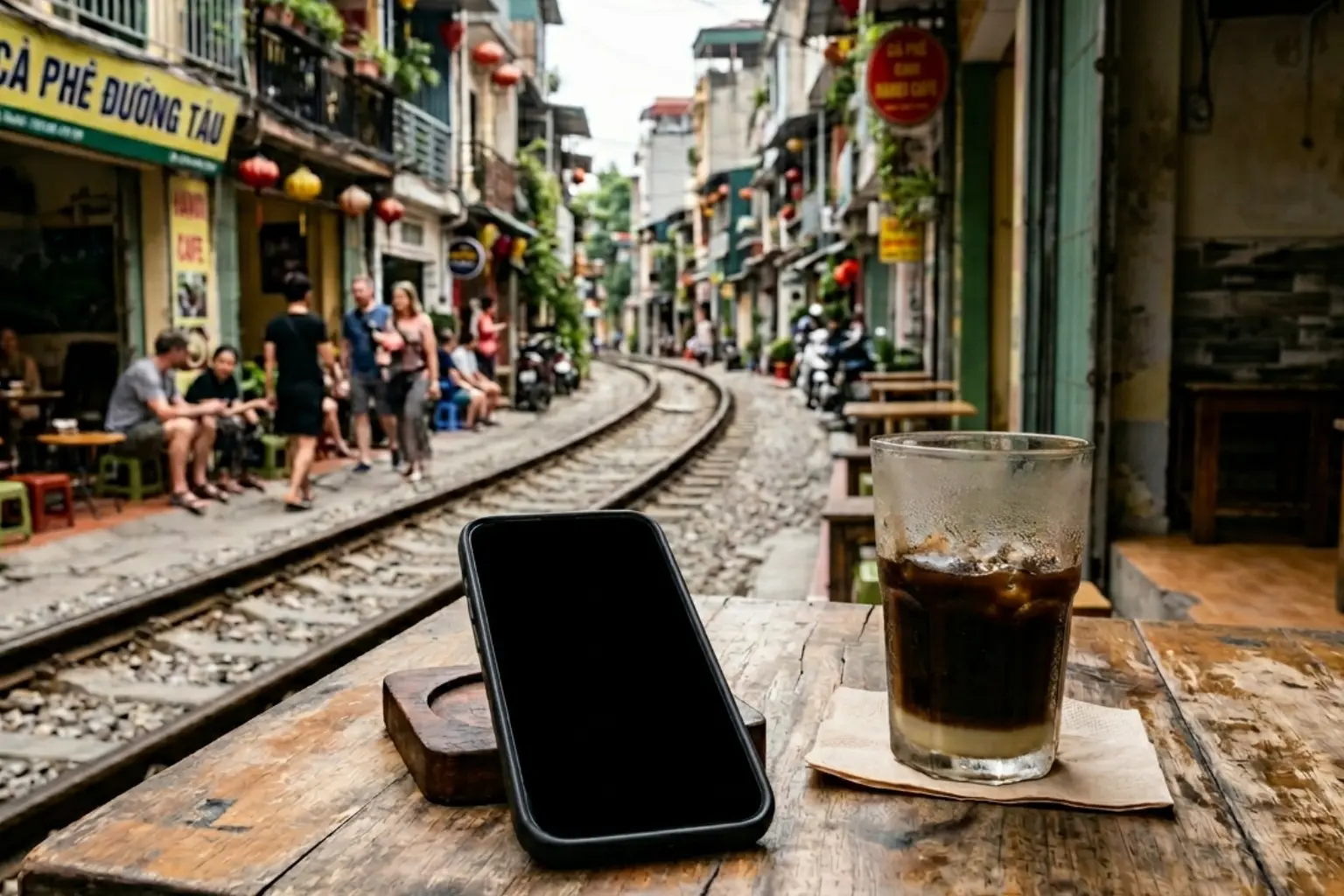
The days of poking paperclips into phone trays while standing in a humid airport queue are over. By setting everything up before we leave home, we can focus on what actually matters, and that is finding the best bowl of Pho Chay in the district and getting our first fix of Vietnamese iced coffee.
Moving Beyond the Physical SIM Card Shuffle
For anyone who hasn’t lived over there, the process of getting a local SIM card used to be a bit of a lottery. You’d hope the kiosk at the airport was giving you a fair deal and that the data would actually last. Living in Vietnam was different as you’d buy a sim and it would come pre-loaded, then you’d just top up as needed by buying more credits at the local Vinmart (now Winmart). Since we are heading over for a solid three weeks, we want something more reliable than that.
We have decided to use Airalo for this trip. The main reason is simplicity. You can jump onto their site, pick a Vietnam eSIM plan that fits your schedule, and install it on your phone while you’re still sitting on your couch in Australia, and we had used them before for our trip to the USA and New Zealand too.
When you land, you don’t need to find a shop or talk to a single person. You just toggle the line on in your settings, and you are connected. It also means you keep your Australian SIM in your phone, which is vital for receiving those one time bank codes or emergency texts from home.
Selecting a Vietnam eSIM Plan for Three Weeks of Travel
When you are looking at the different options for a Vietnam eSIM, it is easy to underplay how much data you will actually need. Even though Vietnam has some of the best WiFi coverage in the world, every tiny coffee shop and roadside stall seems to have a router (and a fast one at that), you won’t be sitting still for long.
For a three week journey like our upcoming holiday, a 1GB or 2GB plan is just asking for trouble. You’ll be using your phone for everything from booking a Grab (the local version of Uber) to checking opening times for local spots. I reckon a 10GB or 20GB plan is the sweet spot of how much you’ll need. It gives you the freedom to upload photos and videos of your travels without constantly stressing about your balance.
Key reasons to choose a larger data plan:
- You can use your phone as a hotspot if the hotel WiFi goes down.
- It allows for seamless video calls back to the family in Australia.
- You have plenty of data for streaming music during long train or bus rides if needed.
Getting Around with Google Maps and Offline Data
The biggest lifesaver for any Aussie traveller in Vietnam is Google Maps. Whether you are navigating the chaotic street corners of Hanoi, stuck in traffic in Ho Chi Minh City or trying to find a hidden beach in Da Nang, having a blue dot on the screen that tells you where you are is essential.
However, constant navigation can chew through your Vietnam eSIM data faster than you’d think. It also drains your battery. To combat this, we always recommend a simple trick. You should download offline maps.
Before you leave the hotel for the day, open Google Maps and download the entire city or region you are visiting, even if you need two or three maps for coverage of the areas you’ll be visiting. This means the map tiles are stored on your phone. Your GPS will still work perfectly, but it won’t be constantly pulling data from the network. It’s a great safety net for those times when you might find yourself in a regional area with a patchy signal. Knowing you can always find your way back to your home base makes exploring those narrow alleyways or navigating your motorbike trip out to Prau a lot more enjoyable and less stressful.
Comparing the Connection to Life Back Home
One thing that always surprises me when I’m over there is how the mobile signal compares to Australia. Back home, if you go ten minutes outside a major town, you can often lose your 5G signal entirely. In Vietnam, you can be in the middle of a rice paddy or on a boat in the Mekong Delta and still have a cracking 4G connection.
The infrastructure is impressive, and with a Vietnam eSIM, you are tapping into that local power without the massive roaming fees your Aussie telco would love to charge you. It is far cheaper to pay for a local digital plan than it is to pay $10+ a day for international roaming that often throttles your speed anyway.
Practical Steps to Get Your eSIM Ready
If you are planning your own trip soon, here is how we suggest you organise your tech.
- Check compatibility: Ensure your phone is eSIM compatible and unlocked from your Australian provider.
- Purchase early: Buy your Airalo plan a few days before you fly.
- Install the profile: Follow the prompts to add the cellular plan to your phone.
- Label your lines: In your settings, label your Aussie SIM as “Primary” and the new one as “Vietnam” so you don’t get them mixed up.
- Data switching: Make sure you set your “Cellular Data” to the Vietnam line and turn off “Data Roaming” on your Aussie line to avoid any nasty surprises on your next bill.
Staying Online While Seeking Out Local Gems
Having a working phone means you aren’t stuck in the tourist traps. You can find the places that don’t have English signs but have the best food you’ve ever tasted, and you can save them to your Google Maps profile straightaway. You can check the local weather to see if a tropical downpour is on the way, or look up the history of a temple while you are standing right in front of it.
We are looking forward to being back in the thick of it, dodging scooters, going back to the places we loved and enjoying the food again. By sorting out the Vietnam eSIM before we leave, we’ve cleared the way for a much smoother adventure.
Are you the type of traveller who likes to have everything booked and ready before you land, or do you prefer to just wing it and see where the day takes you?
